Just wanted to draw some attention to the safety bulletin from the BC Hydro’s Site C, dated June 2, 2017:
They are advising boaters to avoid the Site C area area due to wood debris under the temporary Peace River construction bridge. Please be safe, everybody!
For more info on the dam and construction, visit
sitecproject.com.
I won’t say more than that about Site C, for now, because it still makes me mad/sad. It’s not “clean energy.” It’s a mess.
But please do avoid the construction bridge area. Large amounts of wood in the water can be unsafe and may even form a blockage, which you could get caught in and capsize and drown in (think of sweepers). Be safe, and check this website for updates!
Some reading material, if you’re interested:
desmog.ca
What the temporary Peace River Construction bridge looks like (from 250news.com). I can see how debris might get caught under it.

Hello everyone!
I have been wanting to let you all know that we are no longer operating as a canoe/kayak rental company. We had a good run in High Level, and really enjoyed all the trips, lessons, canoe camps and fun times with you all! We have many wonderful memories. Here are few highlights:
– Canoe camps with kids from High Level, Keg River, and Peace River. In particular, playing wild games of tag at the end of the second day!
– The annual canoe parties with the Filipino society. You rock! 🙂
– Helping to plan, organize and participate in Paddle the Peace. What a great thing we started! So glad you are all keeping it going!
– Canoe lessons with various girl guide groups. Thanks so much for sharing your time with us!
– Canoeing days with the FASD Society. What you do is awesome. Those kids are special, and I’ll never forget how some of them change once they’re in a canoe.
– York boating. I have such amazing memories of the York Boat. 🙂 (Click here if you have no idea what a York Boat is!)
– Family Canoe Nights! Anyone else remember these? We took all our boats to Footner Lake, and offered them on a donation basis. It was so fun, especially when people said they had not brought any money and we said they could go anyway! 🙂
Please don’t think that we are another example of a small business that couldn’t make it. We did make it — we did well. We LOVED what we did!
Please don’t think that we stopped operating because of the economy. That is not the case whatsoever. We had some very unique and special personal opportunities and decided to pursue those instead. We decided to stop operating Flow North so we could focus on these new things and not spread ourselves too thin (although I am still in danger of that! Oh well).
Please don’t think that we weren’t successful because it’s too hard to own/run a paddling company. It’s a LOT of work, but it isn’t impossible. If anyone is interested in starting their own paddling business in northern Alberta, or anywhere for that matter, we’d be happy to share our experiences and advice. In case you are too shy to ask, here are our top 3 tips:
– Be realistic. Don’t think you can make a year’s worth of money in our short Canadian summers. Have a winter job, or have a second income.
– Be prepared to work hard. Turn off your TV, and forget Facebook. If you aren’t willing — or eager — to do these things, this type of enterprise is not for you. If you can’t imagine going without your devices, you are addicted and are missing out on so much sweetness in life!
– Get out there and do it! Paddle everywhere you can think of, so that you can recommend places based on your first-hand knowledge. I spent the first year exploring like crazy! And got paid to do it (I love that part), but it is best if you are prepared to explore without pay!
Thanks again for all the great times. Please check out York Boat Captain and buy a copy if you are interested in hearing about our adventures. It’s available in stores and online.
One more thing: We have had a lot of requests for the Paddling Guide for the Peace River. We are working on making it available online, for free, as soon as possible. Hang in there!
Take care, everyone!
This weekend at Fort Edmonton Park, Teresa is pleased to be going to the Lads on the River weekend! She will be available for one-on-one chats about the York boat expedition she captained, and if you’d like her to sign your book, she’d be happy to!
You’ll find her at the “Ask an Expert” table all day, and if you can, try to come by 1:00 pm, so you can see the York boat arriving on the river! It’s pretty neat, if we may say so, to see Yorkmen pulling on the oars, and the steersman making his/her moves to angle the boat in!
We’d love to see you there!
One more thing: we’ve had quite a few people ask about the paddling guide for the Peace River. It is available here, at GeoTourism Canada’s website, but if you have additional questions, feel free to send us an email!
When you’re camping, don’t you just love a nice, sweet dessert? I sure do. If you’re ever looking for an alternative to s’mores, try this new, delicious dessert I discovered last summer!
Campfire Pastry — Apple Danish! — Using a Pie Iron
Have you ever used a pie iron to make grilled cheese over the camp fire? There is hardly anything more delicious! (I’m a big fan of grilled cheese sandwiches!) Hmmm, perhaps even more delicious is dessert — how about pastry made in a pie iron!?!
Ingredients:
2 apples
a pinch of sugar or tiny bit of maple syrup
butter, oil or margarine (whatever you prefer)
1 roll of Pillsbury Croissants (8 croissants makes 4 pastries)
Equipment needed:
pie iron
frying pan
spoon
Directions:
Start by chopping two apples into small pieces, similar to the preparation for an apple pie. Put the pieces in a frying pan and add a little water and whatever you like for sweetener. I also had some wonderful juniper berries, so I added them for extra flavour. You could also add cinnamon, or use another fruit. You might not use all the filling, but it’s better to have a little too much. If your apple is really big, one might be enough…
Put the frying pan on your camp fire or camp stove and cook the apples a bit until they are soft.
Meanwhile, get a good campfire going and get your pie iron ready. Warm it up a bit and cover the insides of both halves with butter or oil.
| When the apples are ready, take them off the fire. Open the package of croissants (using a spoon), and carefully unroll it a little and break one triangle off the roll. If you have a clean cutting board, it might come in handy now, but I just used my hands. 🙂 | 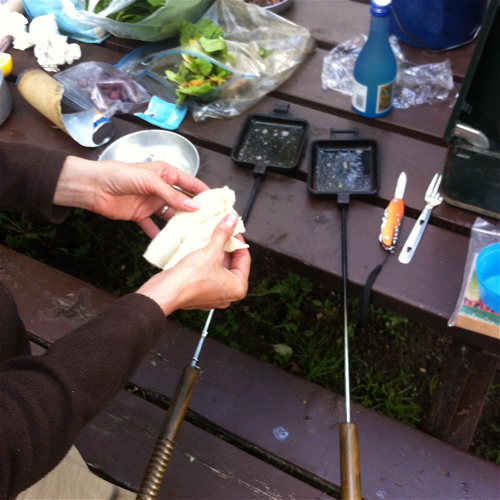 |
| Fold the triangle into a 4-sided shape, somewhat like a kite. | 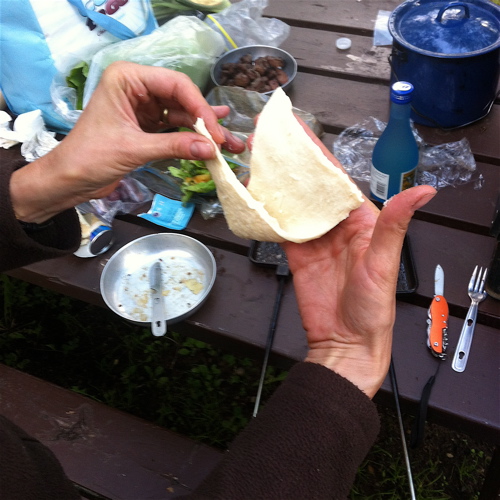  |
| Place it in one side of the pie iron. Repeat the process for the other side of the pie iron. |
 |
| Spoon a little bit of the apple filling on one side. | 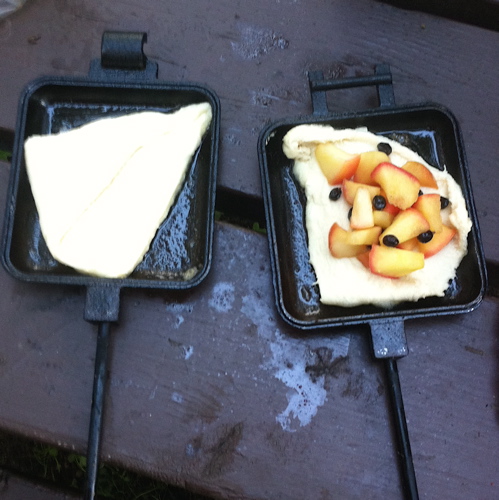 |
| Carefully position the pie iron and close it. If the two halves don’t line up perfectly, don’t worry. The pastry will e-x-p-a-n-d-! | 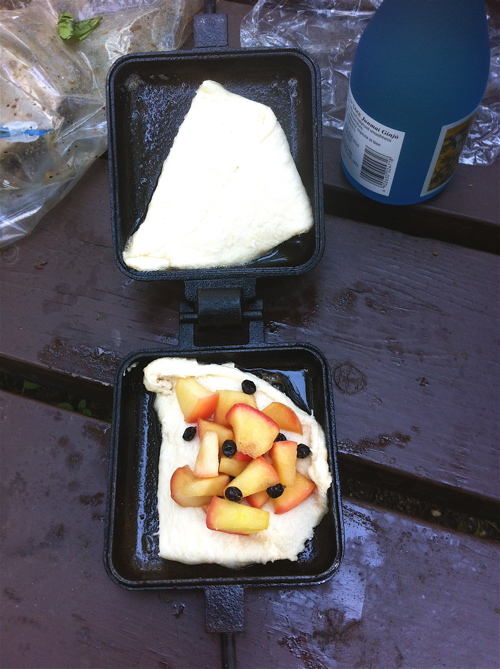 |
| Place the iron on/near your camp fire and turn it over occasionally to cook both sides. Of course, this part is tricky — it’s hard to know when your pastry is done. Our pastries took about 7 minutes, but your fire may be hotter. If there is any doubt, take the pie iron out. It is quick and easy to check, and wouldn’t you rather do that instead of burning your pastry!?!? |  |
When it’s done, pop it out onto a plate and enjoy! Be careful — it will be super-hot at first, so give it a chance to cool. Repeat until you have no more pastry!
Enjoy!
Hello everyone! Summer’s long gone, but spring-like winter days — we’ve had so many this winter! — make me think of paddling! And seeing this today was just the inspiration I needed to get back to blogging!
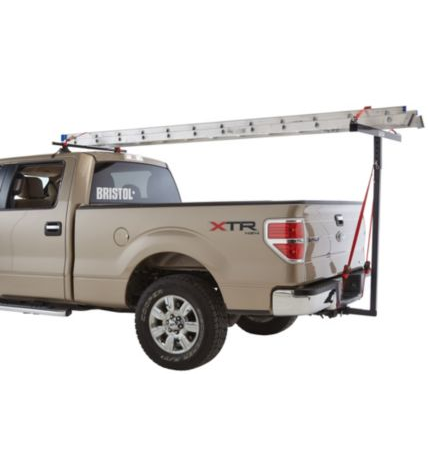
What a great solution to that problem many of us have had of trying to transport a canoe using a pick-up truck! It is up to 4′ wide, which is MORE than wide enough for any canoe, especially considering that they taper at the ends. And it even comes with its own long-load flag! 🙂 Here’s the link for more info: Canadian Tire – Extend-a-Truck
I think we can all agree, this is not the best way (below)! 🙂
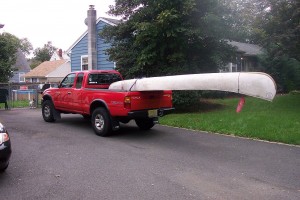
I mean, it works, but we can do better, eh? 🙂
Any do-it-yourselfers out there? Here are a few ideas that work just as well and you’ll have the pleasure of knowing you made it yourself.
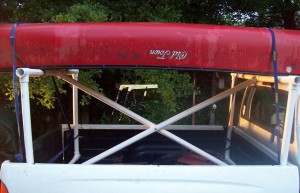
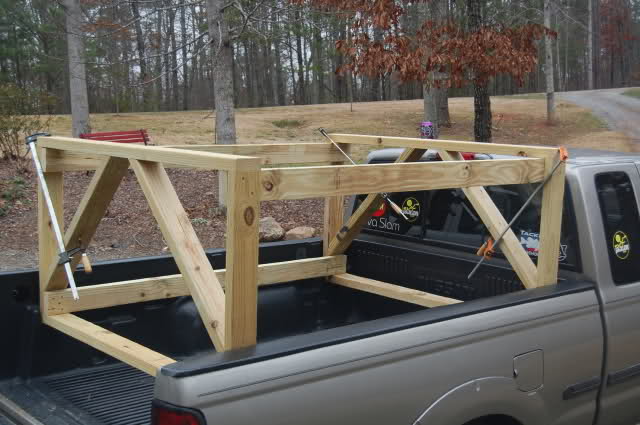
Made from wood. It’s difficult to see how it attaches to the truck…
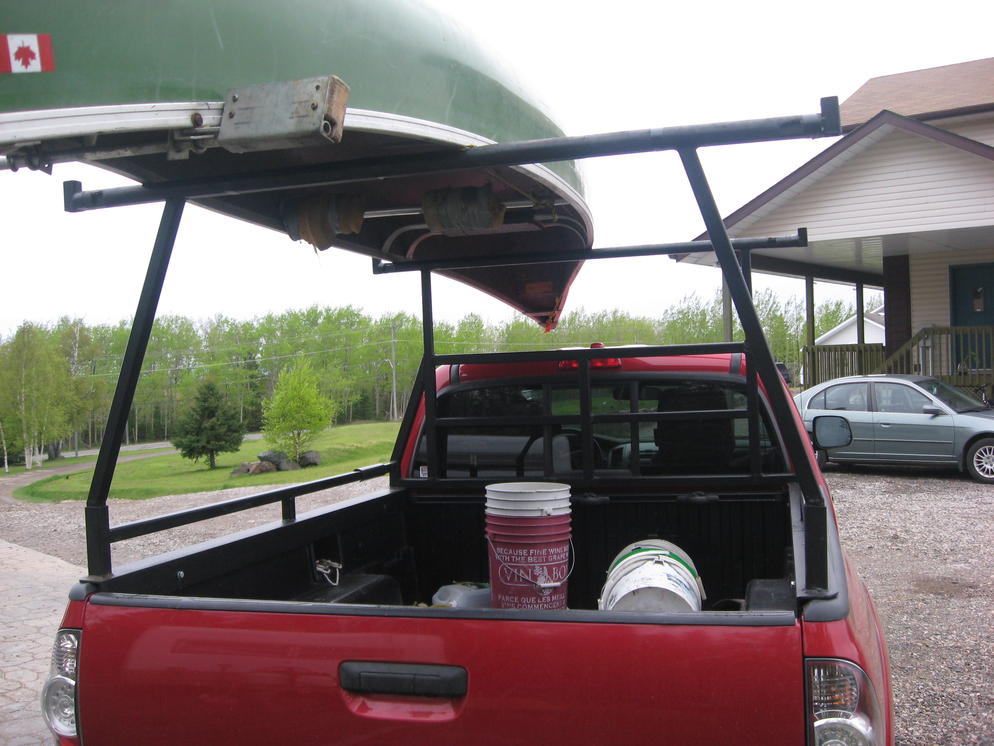
Made from metal!
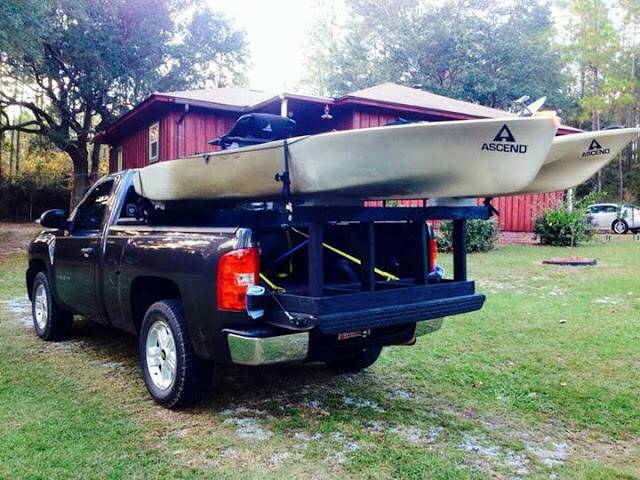
A great idea — more sreamlined — for kayaks (or a very short canoe)
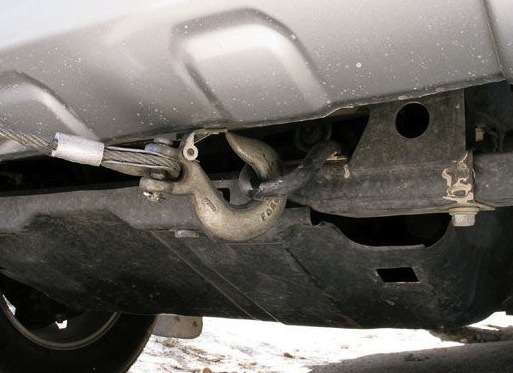
Now, to be fair, you can transport a canoe directly on the roof of a truck, sans rack, if you strap it down right. Start by putting foam blocks (such as these) or a pool noodle (or a piece of a pool noodle) on the roof, to protect the paint. Lift the canoe up there — two relatively tall, strong people can hoist it from one side, or start at the back and “slide” the canoe up. Once it’s up there, adjust the position of the foam if necessary, and then start strapping. Run one near the front of the cab, and one near the back. This will work the best if you have a crew/super crew/extended cab. Then, add one or two straps from the nose of the canoe to an anchor point below the front bumper, and the other end to an anchor point below the back bumper (see photo below to see what an anchor point looks like) or inside the box (if your canoe is short)!
On our Nissan Pathfinder, we strap the canoe directly to the roof racks, which are *perfect* for this. That’s why we bought the Pathfinder! A lot of SUV’s have the racks running from the windshield to the back window, which is the exact WRONG orientation for transporting a canoe. If you are buying a new vehicle, look for racks that run from the passenger to driver’s side — perpendicular to the direction of travel. 🙂
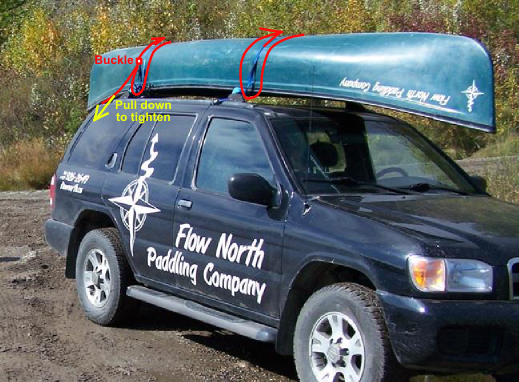
This is how we do it! We run the straps from one side to the other, over the canoe, and we usually use some very nice NRS straps that use a sort of buckle instead of a ratchet — this prevents the ratchet from bumping against the canoe during transport. One our canoe trailer, we use ratchet straps. 🙂
Join us for Paddle the Peace, in Peace River, AB this weekend! We’ll be doing lessons on Saturday and a big group paddle on Sunday. For more information, check out the Facebook page here.
There are three options for how long to go on the river. The longest starts from Peace Valley Guest Ranch, but unfortunately, that portion is all booked up. The next longest starts from the Shaftesbury Ferry and the shortest part is from Strong Creek — a great paddle for a young family with little kids! A lovely brunch at Strong Creek is included in the registration. You should come!
Paddle the Peace is put on by the County of Northern Lights, Northern Sunrise County, the Town of Peace River, and the M.D. of Peace. Call 780-836-3348 to register today! Or tomorrow! After that, registration is closed! 🙂
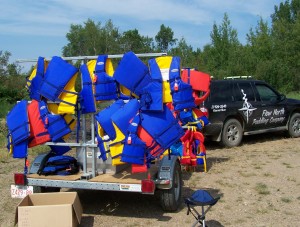
Don’t forget to wear a PFD!
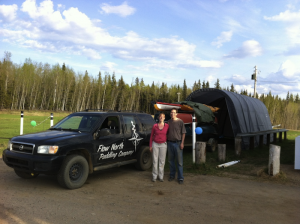
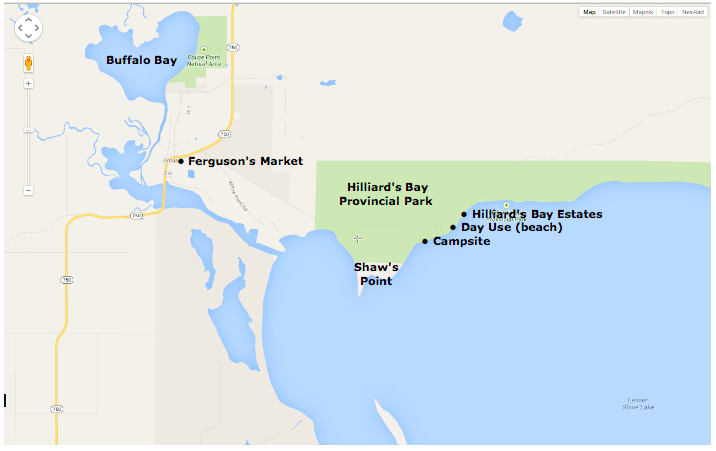
We are excited to announce that Flow North will be operating out of a new base this summer! We will be located in beautiful Grouard, Alberta, on the western end of the Lesser Slave Lake.
Grouard is about 33 km from High Prairie; go west on Hwy 2 and then turn at Hwy 750, when you see the large blue signs for Hilliard’s Bay Provincial Park. From Edmonton, head North to Slave Lake, then drive West on Hwy 2 for about 100 km and watch for the large blue sign.
After driving on Hwy 750 for about 15 km, you’ll see the lake and drive across a low-level bridge across the channel.
Our base will be at Ferguson’s Market, a large blue metal building on the right side of the highway as you approach Grouard, less than a kilometre after the bridge.
We’ll be offering canoe and kayak rentals as before (all safety equipment included) but we are also working hard on offering half-day trips on the York boat! We have some details to work out, but for now we can say:
– the tours will start from the bridge and go into Buffalo Bay
– the morning tour will run from 10 AM – 1 PM
– the afternoon tour will go from 2 – 5 PM
– the boat can also be reserved for whole day tours if desired.
– the boat can accommodate a maximum of 7 rowers (adults and large teenagers) and 3 children, but tours can run with a minimum of 4 rowers.
Check back on our website for more details as we fill them in. Please note that as a result of this move, we will not be offering canoe rentals or parties in the High Level area.
Flow North has been involved in Paddle the Peace from its beginnings, and we’re really pleased to report that Paddle the Peace has won an award! It was nominated for the Growing Rural Tourism Award, along with some very stiff competition. The finalists for the award were the Edmonton Regional Tourism Group, Alberta Southwest and Paddle the Peace.
Big congratulations are in order for everyone involved in Paddle the Peace!
For those who aren’t familiar with Paddle the Peace, it’s a paddling festival that was started in 2010 as a partnership between GeoTourism Canada and several municipalities and counties along the river. The current partners are (in no particular order):
– Town of Peace River
– County of Northern Lights
– Northern Sunrise County
– M.D. of Peace
– Mighty Peace Country.
Corporate sponsors:
– Shell Canada Peace River
– Daishowa-Marubeni International Ltd.
Grant funders:
– Travel Alberta
– Peace Regional Economic Development Alliance (PREDA).
The events of Paddle the Peace include an instruction day where I teach canoeing basics, a “junior” component to give some kids a chance to learn to canoe, and of course, the big paddling day on the Peace River, which includes:
– shuttle service to the river
– safety briefing on the way to the river
– volunteers at the start and end points to help people get in, get out and carry their boats (if needed)
– paramedics on board the Peace River Fire Department’s boat
– a grab bag of goodies, plus draws and other prizes
– a full brunch put on at Strong Creek Park (see photo below)!
The event organizers have been amazing at fundraising to keep costs down so that as many people as possible can join in. Last year, registration was a mere $10 per person or $25 for both days (instruction and paddling). What a deal!
The organizers of the event are so wonderful to work with! Their hard work and dedication are legendary — they even posted their cell phone numbers on the Facebook page so people with questions would be able to reach them. In 2013, the event was completely full — although the river had room for more boats, 🙂 the brunch and shuttles were full to capacity. So, I have to say a huge congratulations to the organizers for winning the Growing Rural Tourism Award! 🙂
Next year, Paddle the Peace will take place on Aug 16-17, 2014 in and around the town of Peace River. You should come! 🙂
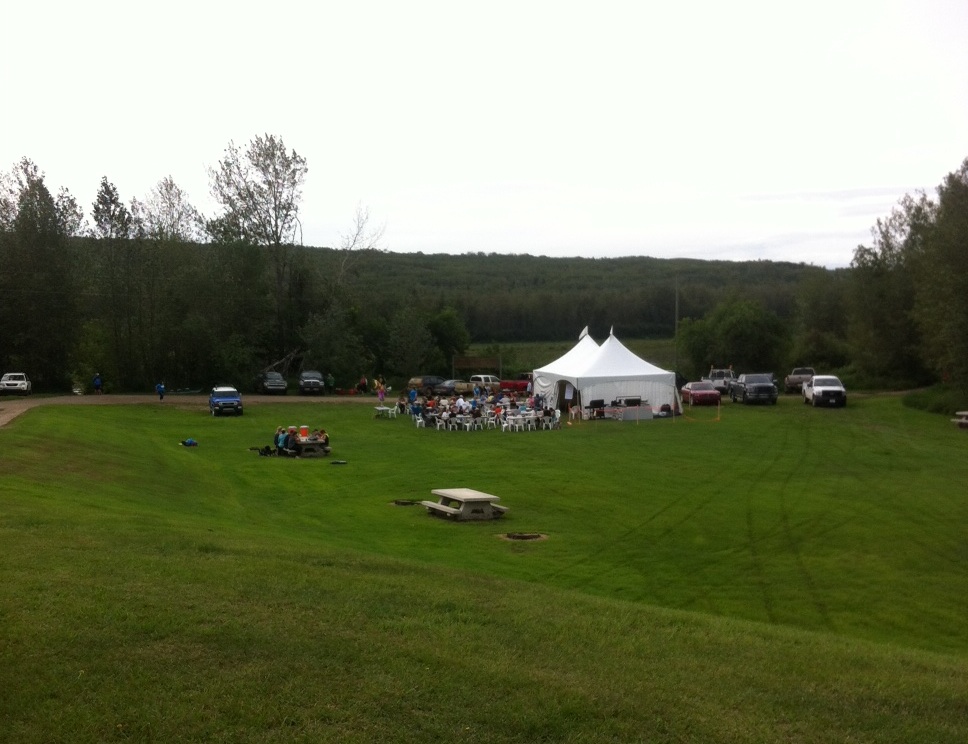
I was so busy, I didn’t have time to take many pics, but I did snap this one of the brunch!
If you’ve seen us around Alberta, you undoubtedly noticed our larger-than-life logo on the side of our Nissan Pathfinder, which we love!
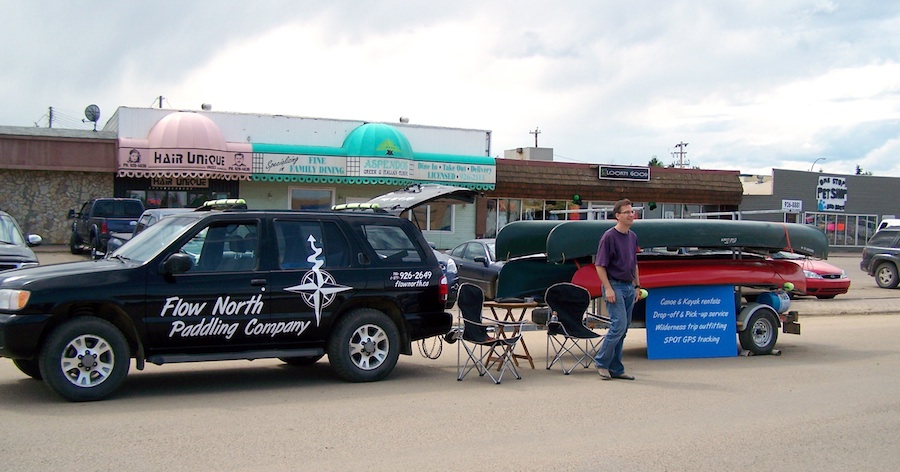
Promoting our business at the summer shopping event in downtown High Level
If you noticed it a couple of weeks ago stopped on the side of Hwy 49 north of Valleyview, or parked in a mechanic’s yard in Valleyview, well, let me tell you about a little winter adventure we had!
We were on our way to Edmonton to visit family and pick up a shipment of York Boat Captain books from our Canadian printing company. All was going well until the cruise control spontaneously went off. Then the ABS light came on, and the emergency brake indicator was flashing. We made a quick call to a mechanically-inclined friend of ours who told us the likely cause — the alternator or the battery. He figured we could probably go for a half hour or so, so we continued on.
We weren’t that far out of Valleyview, and we thought we could make it… and we came close! Our beloved Pathfinder came to a rolling stop about 10 km north of town. Thankfully, we were near a driveway, so we pushed it the last 10 metres or so to get it safely off the road. We walked up the driveway, hoping someone was home.
The woman who lived there was so kind! She quickly agreed to drive us into town to a hotel, and on the way, she told us her daughter works for the best mechanic in town! Uncanny. We took the name and number of the place, along with her suggestion of a tow truck driver to call. She said, “just tell them you’re at Susie’s north of town, and he’ll know where that is!” Gotta love small towns!
The hotel we chose turned out to the nicest, cheapest hotel in Alberta, I’m sure. I mean, where else can you get a really nice room for $79/night! In the morning, Darren and I walked over to Napa Auto Parts to see about a battery. A lovely lady named Charlotte stared searching on her computer to see if they had the right kind. Unfortunately, they didn’t (I had never noticed how batteries come in so many sizes), and they couldn’t find one at nearby Napa stores either. Meanwhile, a fellow who worked there, Dean, took a battery off the shelf and started measuring it. He figured he could make it work — it was a slightly smaller than we needed — so he offered to drive Darren out to the Pathfinder and install the battery to get us into town. No tow truck needed!
Well, the manoeuvre worked. The battery was much too small and the terminals were reversed, so to hook it up, Darren and Dean had to put it on an angle. It did the trick though, so Darren drove the Pathfinder to the mechanic’s shop. Dean, the bearded sweetheart that he is, didn’t charge us for the use of the battery, and came back to Napa to get me. The mechanic, Ken, put our battery on the charger to check its condition.
The battery was taking a charge just fine, so after 10 minutes or so, they put it in our vehicle to drive it into one of their bays. Now, make no mistake — the mechanic shop, called “MacKENics” after the owner, Ken, was completely booked. Ken, taking pity on us I suppose, still managed to help us out and it was determined that our alternator was dead.
Such a small part, but without it, wheels don’t turn. So, I continued the search I had started with Charlotte to find a replacement. The Nissan dealer in Grande Prairie was able to locate one at a Napa warehouse in Edmonton, so Charlotte ordered it for us. Darren got the idea that maybe our belts should be replaced at the same time. Ken agreed, so the belts were also ordered, and all the parts would arrive the next day. The only problem was the next day was a Saturday, and the mechanic shop is closed on Saturdays.
Ken didn’t even skip a beat when we realized it. He just called one of his mechanics who was having a day off and asked him to come in. So, while Darren and I had a leisurely morning, a guy who was supposed to be lounging at home came in and fixed our Pathfinder for us! We walked over and got it and were underway shortly after noon.
So, let me make a huge shout out to Susie, Charlotte and Dean at Napa, Ken at MacKenics, everyone at the Horizon Inn, and Ryan at the Grande Prairie Nissan dealership. Thank you so much for getting us back on the road! We actually enjoyed out little unexpected vacation in Valleyview. 🙂
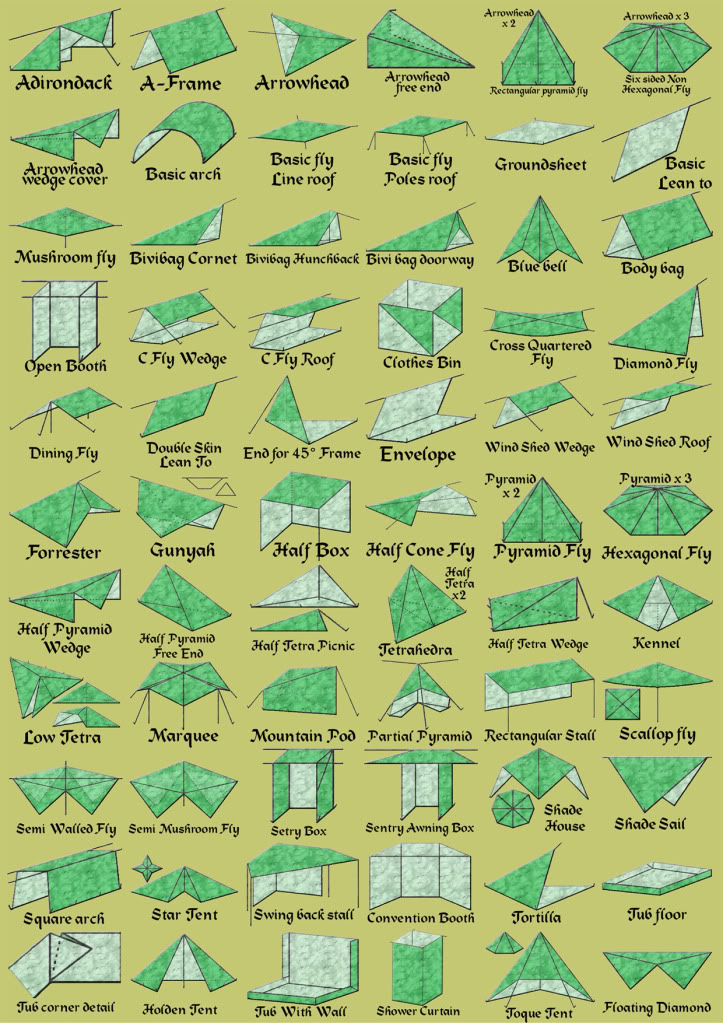
I came across this old-school infographic and thought it might be useful! There are some very elaborate uses for tarps here, but you never know when you might want or need to make one!